



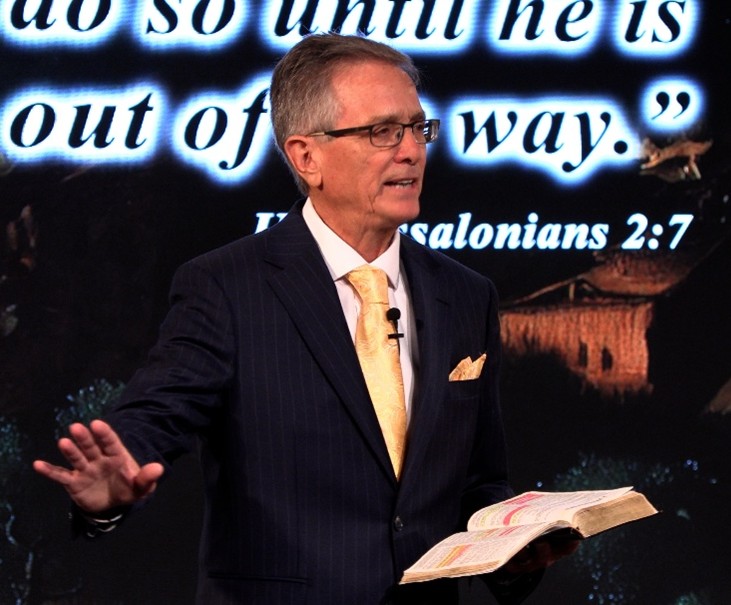
“Submit yourselves for the Lord’s sake to every human institution, whether to a king as the one in authority, or to governors as sent by him for the punishment of evildoers and the praise of those who do right.” 1 Peter 2:13-14
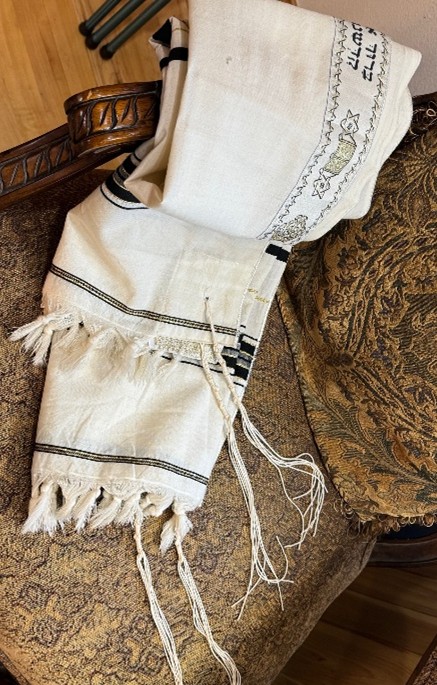
God intentionally separates those serving Him from the general populace, and He has set up leaders in layers within political and religious institutions. Not everyone is called by God to lead, and not all those in leadership were called there. In order to distinguish leaders from the laity, God ordained that they be recognizable by their attire and their carriage. The Jews as a whole were also to be distinguished from the goyim (the gentiles), by the wearing of garments with ‘tzitzits’ (pronounced zeet-zeets). The garment had to have four corners, each corner drawn to a tassel or a fringe.
These commonly today are called “tallits”, also known as prayer shawls. Jesus was wearing one in Matthew 9:20-21. “And a woman who had been suffering from a hemorrhage for twelve years, came up behind Him and touched the fringe of His cloak; for she was saying to herself, ‘If I only touch His garment, I will get well.’” Honor came through office and rank, made apparent by attire.
Then there were religious institutions set up by Yahweh God under the Old Covenant. The Tabernacle, where the dwelling place of God was, and where service to Him was conducted. Followed by the Priesthood, the mediators between God and the people, from the sons of Aaron and the tribe of Levi. Then there was the seven Festivals, the Torah or Law, and the support system with the tithes of the people. These systems more or less perpetuated into Christianity for the last 2,000 years. That is, until recently.
The priests under the law of Moses were treated with dignity and respect in daily life. They served in the Temple only a few times a year, and the rest of the time they lived daily and normal lives. While not in the service of the sanctuary, they farmed very small plots of land, studied the scriptures, and taught in their villages. If someone was sick, they would act as doctor and healer, following the Levitical laws for diseases or death. They were given respect for their office, and they were restricted from certain duties of common men.
In Exodus 28:2-3, the clothing of the priests is described as full of glory and beauty. “You shall make holy garments for Aaron your brother, for glory and for beauty. You shall speak to all the skillful persons whom I have endowed with the spirit of wisdom, that they make Aaron’s garments to consecrate him, that he may minister as priest to Me.” The entire chapter describes clothing to make and wear while ministering before God. You should go and read it. In verse 36, “You shall also make a plate of pure gold and shall engrave on it, like the engravings of a seal, ‘Holy to Yahweh.’”
Then to prevent anarchy and ensure absolute respect for the religious system managed by the priesthood, there were outright protections, as seen in Deuteronomy 17:12-13. “The man who does presumptuously, in not listening to the priest who stands to minister there before Yahweh your God, or to the judge, even that man shall die: and you shall put away the evil from Israel. All the people shall hear, and fear, and do no more presumptuously.” There are a number of incidents described in both the Old and New Testaments that show God’s protection and favor to His distinct servants. In Numbers 16:24-33, we see Korah and his rebellion. “Speak to the congregation, saying, ‘Get back from around the dwellings of Korah, Dathan and Abiram.’…. As he finished speaking all these words, the ground that was under them split open; and the earth opened its mouth and swallowed them up, and their households, and all the men who belonged to Korah with their possessions. So they and all that belonged to them went down alive to Sheol; and the earth closed over them, and they perished from the midst of the assembly.”
Ceremony, attire, and special protection. All designed to honor God, honor His priests, and honor the people as distinct from the other nations. Today, we are not released from honoring the institution of the priesthood, as described in Ephesians 4:11-13.
“And He gave some as apostles, and some as prophets, and some as evangelists, and some as pastors and teachers, for the equipping of the saints for the work of service, to the building up of the body of Christ; until we all attain to the unity of the faith, and of the knowledge of the Son of God, to a mature man, to the measure of the stature which belongs to the fullness of Christ.”
The word “pastors”, underlined above, in the Greek means, shepherd (poimēn), which literally means a tender or keeper of sheep. The English word “pastor” comes directly from the Latin word pastor, which is a translation of the Greek poimēn. So, a better way of reading this verse in Ephesians is, “And He gave some as apostles, and some as prophets, and some as evangelists, and some as shepherds and teachers…”
Notice that in all mainline denominations, the pastor, priest, and elder, all dress ceremoniously? Much like the description of the priests attire described in Exodus 28. The sixteenth century early American church had reverence for the pastoral priesthood. These shepherds, from all accounts, dressed distinctly differently from their sheep, at least on Sundays! And even the sheep wore their “Sunday best” clothing. Not so today.
The American church has pastors with either clothing with rhinestones and glitter, or designer jeans and slippers. These good pastors have relinquished their calling of “Shepherds”, to become like the “sheep”, so as to be…what? There was a book written in 1975 called, “Dress for Success”, where attire signifies status. In the parable of the Wedding Clothes, Jesus says in Matthew 22:11-12,
“But when the king came in to look over the dinner guests, he saw a man there who was not dressed in wedding clothes, and he said to him, ‘Friend, how did you come in here without wedding clothes?’ And the man was speechless.”
WHY ARE AMERICAN SHEPHERDS DRESSED LIKE SHEEP?
If we as shepherds would at least dress the part, then we’d all have the ability to talk about the dignity of our office. I am consistency surprised at the lack of dignity and honor shown to American pastors in the United states. In Hebrews 13:17 Paul states that there is a cost to disrespecting your elders.
“Obey your leaders and submit to them, for they keep watch over your souls as those who will give an account. Let them do this with joy and not with grief, for this would be unprofitable for you.”
“The elders who rule well are to be considered worthy of double honor, especially those who work hard at preaching and teaching.” 1 Timothy 5:17.
“But we request of you, brethren, that you appreciate those who diligently labor among you, and have charge over you in the Lord and give you instruction, and that you esteem them very highly in love because of their work. Live in peace with one another.” 1 Thessalonians 5:12-13.
Please prayerfully consider supporting me and the calling that God has graciously given to me.
I am praying for you daily. Please pray for me and this ministry daily.
Shalom.
Pastor David Gonzalez
Reminder, October is Pastor Appreciation Month, Kathy Gonzalez





Leave a Reply